

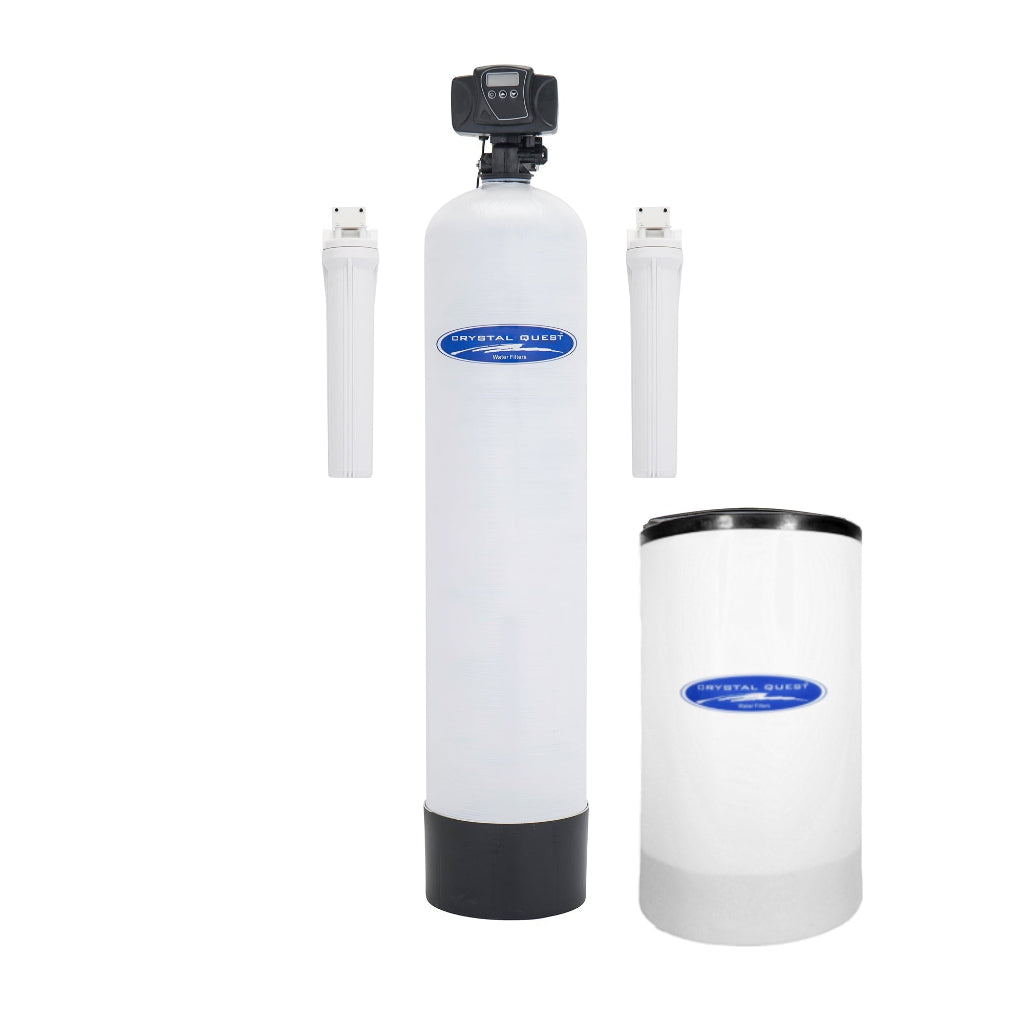

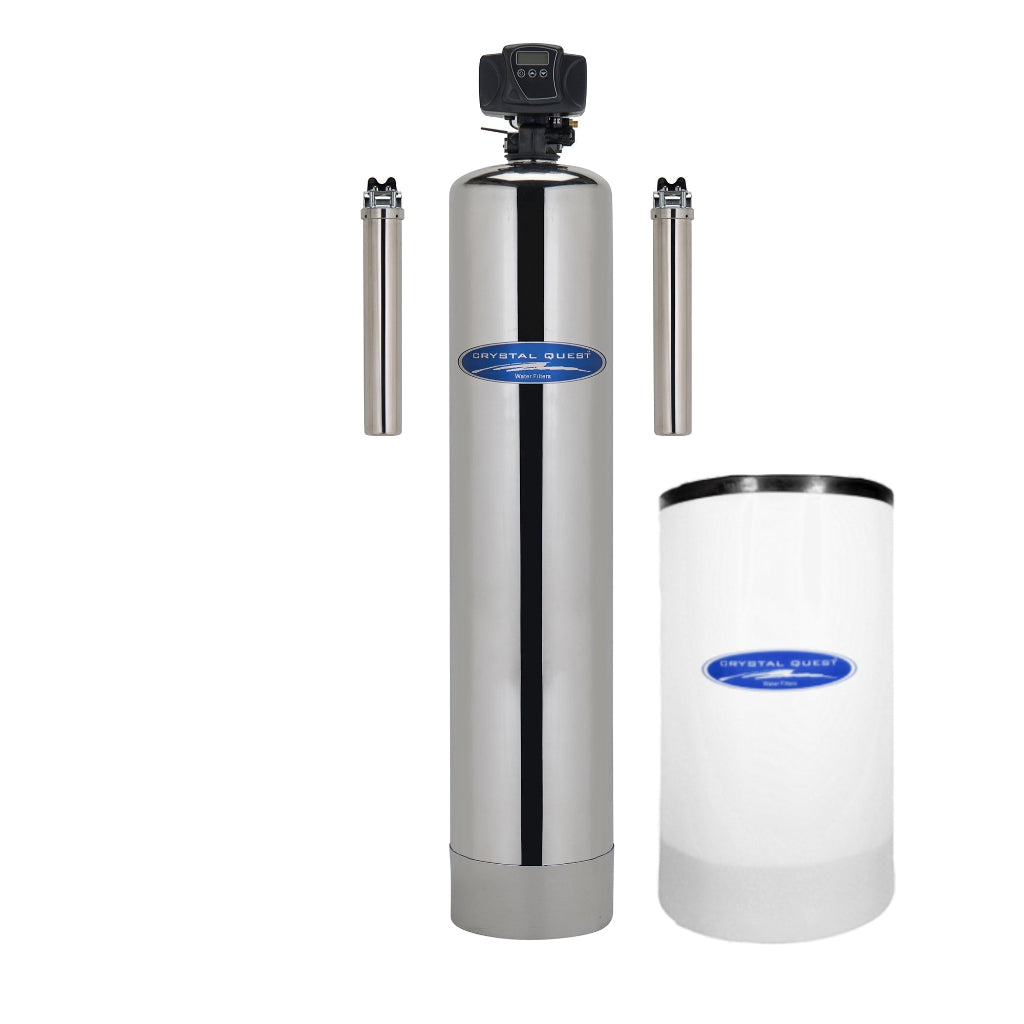
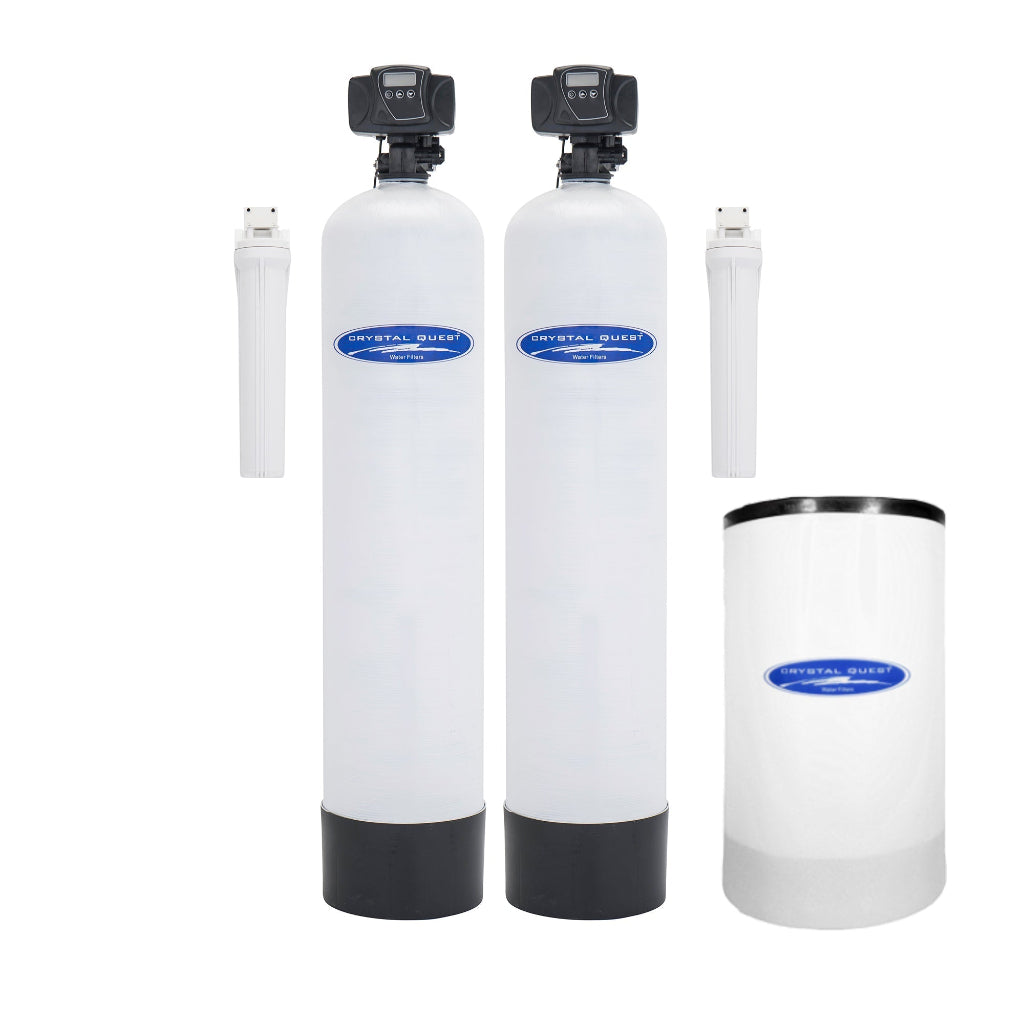
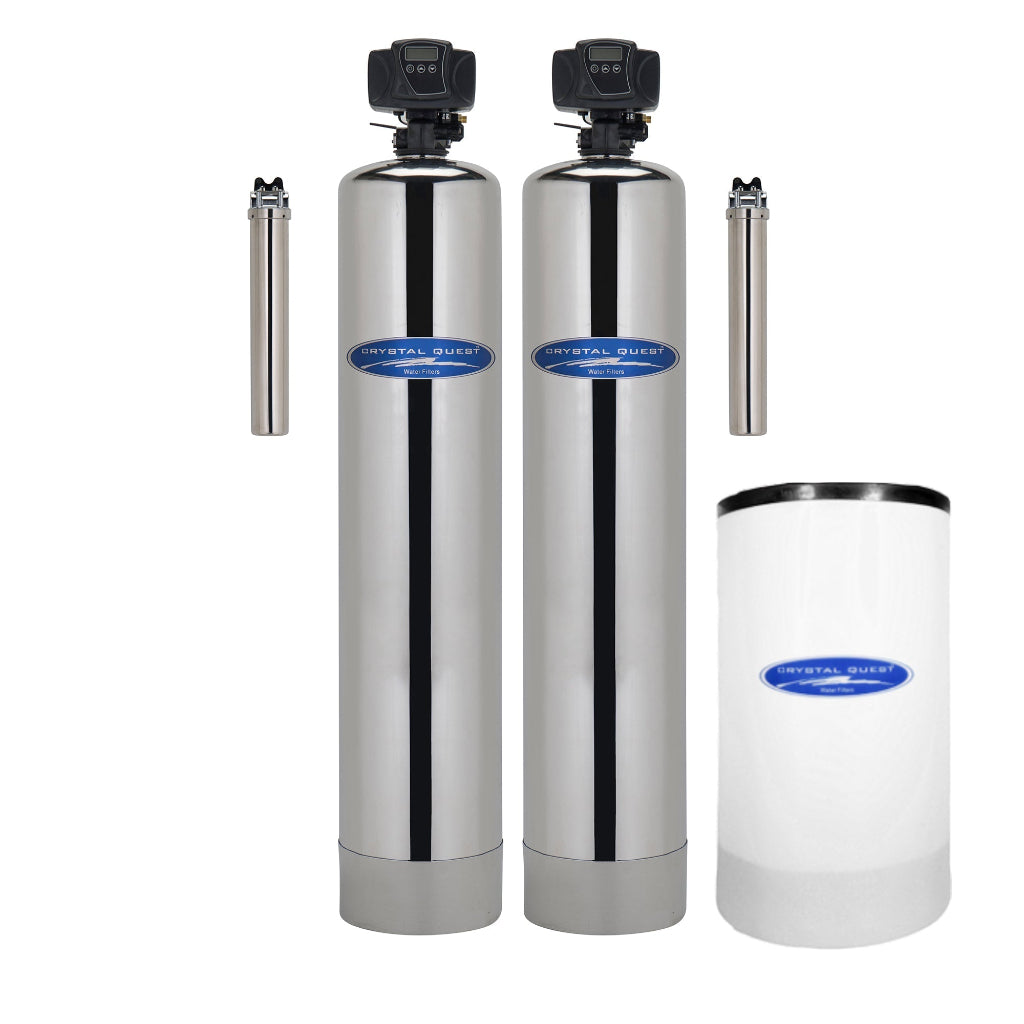
Crystal Quest | Whole House Lead Removal Water Filter | 750,000–1,000,000 Gallons
Choose options
Crystal Quest | Whole House Lead Removal Water Filter | 750,000–1,000,000 Gallons
Specialized Lead Reduction with Automatic Resin Regeneration
Overview
Protect your household drinking water with the Crystal Quest Whole House Lead Removal Water Filter, designed to reduce lead contamination through specialized ion-exchange filtration.
Lead can enter drinking water through the corrosion of older plumbing, solder, and fixtures. Because dissolved lead is invisible, odorless, and tasteless, laboratory testing is essential.
This system combines lead removal resin, SMART multimedia filtration, sediment pre-filtration, carbon post-filtration, and automatic regeneration.
Available in 750,000- and 1,000,000-gallon manufacturer-rated configurations, with stainless steel or fiberglass tanks and service flow options ranging from 6–18 GPM.
Ideal for residential properties, private wells, and buildings with documented lead contamination.
Key Features & Benefits
-
Targeted Lead Reduction: Specialized ion-exchange resin designed to capture dissolved lead.
-
Whole-House Treatment: Filters incoming water before distribution throughout the property.
-
Automatic Regeneration: Recharges treatment resin using sodium or potassium chloride brine.
-
SMART Multimedia Filtration: Adds activated carbon, Eagle Redox Alloys®, and ion-exchange treatment.
-
Multi-Stage Filtration: Includes 20-inch sediment and carbon cartridges.
-
6–18 GPM Flow Options: Multiple configurations for different household demands.
-
Two System Sizes: Manufacturer-listed capacities of 750,000 and 1,000,000 gallons.
-
Tank Material Options: Stainless steel or fiberglass.
-
Additional Protection: Optional UV disinfection and automatic leak detection.
How the Filtration System Works
1. Sediment Pre-Filtration
Incoming water passes through a 20-inch sediment cartridge to reduce sand, silt, dirt, and suspended particles.
2. Lead Removal Ion-Exchange Resin
Water flows through specialized resin beads that exchange sodium ions for certain dissolved metal and hardness ions.
The resin is designed to capture lead while also interacting with calcium and magnesium.
As the resin becomes saturated, its treatment capacity decreases.
3. Automatic Resin Regeneration
The system automatically regenerates the resin using a concentrated sodium chloride or potassium chloride brine solution.
The regeneration process flushes accumulated ions from the resin and discharges the spent brine through the drain.
Regeneration is generally programmed on a weekly schedule, although actual requirements depend on water quality and usage.
Regular regeneration with sodium or potassium chloride is required.
4. SMART Multimedia Filtration
The system incorporates Crystal Quest SMART filtration media, including:
-
Standard and catalytic coconut-shell activated carbon
-
Eagle Redox Alloys® 6500 and 9500
-
Ion-exchange resin
-
Ceramic and tourmaline mineral media
This treatment stage is designed to reduce additional contaminants, including chlorine, chloramine, certain heavy metals, and selected organic chemicals.
5. Carbon Post-Filtration
A 20-inch solid carbon cartridge provides additional reduction of selected volatile organic compounds (VOCs), pesticides, insecticides, and industrial solvents.
Understanding Lead in Drinking Water
Lead is a toxic heavy metal that can enter household drinking water through corrosion of lead-containing plumbing materials.
Older homes and buildings may have lead service lines, solder, or plumbing components that contribute to contamination.
Lead exposure is especially concerning for infants, children, and pregnant individuals.
The U.S. EPA maximum contaminant level goal for lead in drinking water is zero.
Because lead cannot be reliably detected by taste, smell, or appearance, laboratory testing is necessary.
Important: A whole-house treatment system may not address lead introduced by plumbing or fixtures located downstream of the filter. Point-of-use filtration and replacement of lead-containing plumbing may also be necessary.
Available Models & Specifications
| Specification | 750,000-Gallon Model | 1,000,000-Gallon Model |
|---|---|---|
| Manufacturer-Listed Capacity | 750,000 Gallons | 1,000,000 Gallons |
| Service Flow Options | 6–8 or 8–10 GPM | 12–14 or 16–18 GPM |
| Tank Dimensions | 10" × 54" | 12" × 52" |
| Tank Material | Stainless Steel or Fiberglass | Stainless Steel or Fiberglass |
| Backwash / Regeneration | Automatic | Automatic |
| Brine Tank Dimensions | 18" × 33" | 18" × 33" |
| Grain Capacity | 48,000 Grains | 60,000 Grains |
| Regeneration Media | Sodium or Potassium Chloride | Sodium or Potassium Chloride |
Service flow depends on the selected configuration.
Capacity Note: Manufacturer-listed gallon capacities do not establish guaranteed lead removal capacity or media lifespan. Actual performance depends on incoming lead concentration, competing dissolved minerals, water chemistry, and regeneration conditions.
Optional System Upgrades
Leak Detector Valve
Detects water leaks within the filtration system and automatically shuts off the water supply to help minimize flooding.
12 GPM UV Water Sterilizer
Provides ultraviolet disinfection for appropriately pretreated water.
UV treatment targets susceptible microorganisms but does not remove dissolved lead.
Stainless Steel vs. Fiberglass Tanks
Stainless Steel
Suitable for installations where stainless steel construction is preferred and environmental conditions are compatible.
Fiberglass
Recommended by the manufacturer for environments exposed to high humidity, salt, or persistent condensation.
Stainless steel tanks may develop rust or pinholes under certain environmental conditions.
Ideal Applications
-
Whole-House Lead Reduction
-
Residential Drinking Water Treatment
-
Older Homes with Lead-Containing Plumbing
-
Private Well Water Systems
-
Rural Homes & Homesteads
-
Off-Grid Residential Properties
-
Properties with Documented Lead Contamination
-
Residential Water Treatment Infrastructure
Installation & Maintenance
Installation Requirements
-
Obtain laboratory testing for lead, hardness, pH, and relevant water chemistry.
-
Confirm the system's suitability for the measured lead concentration.
-
Install on the home's main incoming water line.
-
Provide a suitable drain connection for regeneration wastewater.
-
Confirm electrical requirements for the automatic control valve.
-
Allow adequate space for the filtration tank, brine tank, and cartridge housings.
-
Evaluate downstream plumbing for additional sources of lead.
Routine Maintenance
-
Maintain adequate sodium or potassium chloride in the brine tank.
-
Monitor automatic regeneration.
-
Replace sediment and carbon cartridges according to manufacturer recommendations.
-
Inspect resin performance and control valve operation.
-
Periodically test treated water for lead.
-
Maintain optional treatment components according to manufacturer instructions.
Warranty
Manufacturer warranty coverage, duration, and exclusions should be confirmed before purchase.
The OGH Difference
At Off-Grid Habitats, we provide specialized water filtration systems and essential infrastructure for residential, commercial, and off-grid developments.
We help customers select treatment solutions based on documented water quality, household demand, and long-term maintenance requirements.
Address Lead Contamination at the Source
Explore the Crystal Quest Whole House Lead Removal Water Filter, featuring specialized ion-exchange resin, automatic regeneration, and multi-stage filtration.
Choose from 750,000- or 1,000,000-gallon manufacturer-rated configurations, with multiple service flow options.
Request Your Personalized Quote Today to confirm water quality compatibility, system sizing, available options, pricing, and delivery.
Important: Lead reduction performance depends on incoming water chemistry, contaminant concentration, flow rate, and resin condition. Independent lead reduction certification was not provided in the source specifications. Laboratory testing before and after installation is recommended. Whole-house filtration does not eliminate lead introduced by downstream plumbing.
Product Manual
Water Softener Product Data Sheet
Water Softener Safety Data Sheet
2.0 CL Iron Soft Lead Arsenic Schematic